Why Most Checklists Fail Before You Even Start
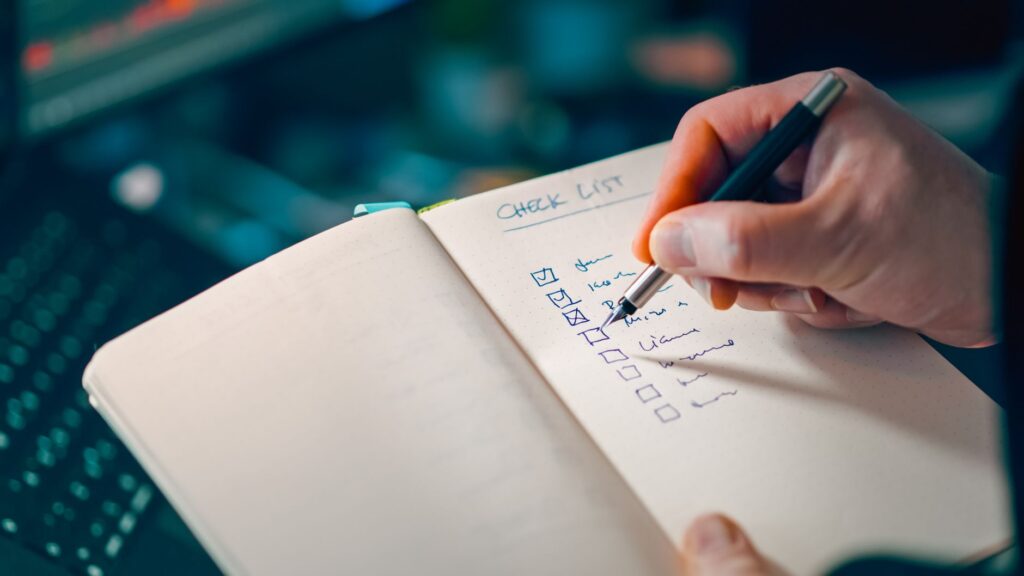
You’ve made the checklist. You’ve even organized it by priority. And somehow, by Thursday, it’s sitting in a tab you haven’t opened since Monday. Sound familiar? The problem usually isn’t your discipline , it’s that most checklists are built in a way that makes them easy to ignore.
Generic, vague, and disconnected from how you actually work, traditional checklists feel like obligations rather than tools. That’s where AI checklists change the game. When you use AI to build and structure your task lists, you’re not just getting a fancier format , you’re getting something that’s designed around your actual workflow, your actual deadlines, and your actual brain.
This guide is going to walk you through exactly how to do that. Not in theory. In practice, with real prompts, real strategies, and real results.
What Makes an AI-Generated Checklist Different
Before getting into the how, it’s worth understanding why this approach works better than writing a list yourself or using a basic template.
When you create a checklist manually, you’re doing it from inside your own head , which means you’re already subject to optimism bias. You underestimate how long tasks take, you lump complex multi-step projects into single line items like “finish report,” and you skip the small friction points that always end up derailing you. Studies on planning fallacy suggest people underestimate task completion time by 25% to 50% on average. That’s not a small gap.
AI doesn’t have that bias. When you prompt it correctly, it breaks down goals into realistic steps, flags dependencies, and structures your list in a sequence that actually makes sense. The result is an effective checklist AI builds with you rather than one you fight against all week.
The key phrase there is “prompt it correctly.” The output quality depends entirely on what you put in. Let’s cover that.
How to Give AI the Right Context for Your Checklist
Most people open ChatGPT or Claude and type something like “make me a checklist for launching a product.” They get a list that looks thorough but fits nobody’s actual situation. The fix is specificity.
Think of your AI prompt like a briefing you’d give a really smart assistant on their first day. They need context to help you well. Here’s what to include:
- Your goal or project: Not just “launch a product” but “launch a Shopify store selling custom dog collars, targeting pet owners on Instagram.”
- Your timeline: “I have three weeks before the launch date.”
- Your current status: “I’ve already built the website and set up payment. I still need marketing, email setup, and photography.”
- Your role and bandwidth: “I’m doing this solo, working about 10 hours per week on it.”
- Any constraints: “I have a $200 budget for ads and no graphic design experience.”
With that kind of input, when you create a checklist with AI, you’ll get something tailored to your actual situation , not a one-size-fits-all template pulled from a blog post written in 2019.
A Prompt Structure That Works Every Time
Here’s a prompt framework you can adapt for almost any project:
“I need to [achieve X goal] by [specific date or timeframe]. My current situation is [brief description of where you are now]. I’m working [alone/with a team of X], and I have roughly [X hours per week] available. Please create a detailed, sequenced checklist that breaks this into daily or weekly tasks, flags anything that needs to happen before something else, and highlights the two or three most critical items. Format it so I can follow it step by step.”
That last line matters. Telling the AI how to format the output shapes how usable the checklist actually is. If you don’t specify, you often get a wall of bullet points with no logical flow.
Structuring Your AI Task Checklist for Real Completion
Getting AI to generate a list is the easy part. Getting yourself to complete it is the actual challenge. Here’s how to structure your AI task checklist in a way that works with your psychology, not against it.
Sequence Tasks by Dependency, Not Just Priority
Prioritization is overrated if you haven’t sorted out dependencies first. It doesn’t matter that writing your email sequence is “high priority” if you haven’t finalized your offer yet. Ask your AI explicitly: “Please order these tasks so that no step requires something that comes after it.” This one instruction alone makes checklists dramatically more executable.
Break Down Anything That Takes More Than 90 Minutes
One of the most common causes of checklist stall is a task that’s actually a project disguised as a single item. “Create content calendar” sounds simple. But it involves researching competitors, choosing platforms, deciding on content pillars, picking a scheduling tool, and drafting the first month’s posts. That’s five tasks, not one.
Tell the AI: “Any item that would take more than 90 minutes, please break into smaller sub-tasks.” This is one of the most powerful prompts you can use when building a productivity checklist with AI. You’ll get realistic task sizes that you can actually slot into your day.
Add a “First Action” to Every Major Item
Research from psychologist Peter Gollwitzer on implementation intentions shows that specifying exactly when and how you’ll do something dramatically increases follow-through rates. You can build this into your AI checklist generation by asking: “For each major task, include a suggested first action I can take to get started.”
Instead of just “Write landing page copy,” your checklist says “Write landing page copy , start by listing the three biggest objections your customer has before buying.” That tiny addition removes the friction of figuring out where to begin.
Using AI to Personalize Checklists to Your Work Style
Here’s something most people don’t realize: you can tell the AI about how you work and have it factor that into the checklist structure. This is where creating an effective checklist with AI really pulls ahead of any static template.
Are you someone who does deep work in the morning but loses steam after lunch? Tell the AI. It can front-load cognitively demanding tasks and save administrative items for the afternoon. Do you work better with weekly milestones rather than daily to-dos? Ask for that format. Do you tend to procrastinate on tasks involving phone calls or meetings? Flag that, and the AI can suggest pairing those tasks with easier wins immediately before or after them.
Here’s an example prompt addition: “I do my best creative work between 8 and 11 AM and prefer not to schedule meetings or admin tasks during that window. Please structure this checklist so the most cognitively demanding work is marked as morning tasks.”
That’s not something a template can do. That’s a personalized productivity checklist built by AI around how you actually function as a human being.
Maintaining and Updating Your Checklist with AI Over Time
The other big advantage of using AI for checklists is the ability to iterate quickly. Real projects change. Deadlines shift. Priorities evolve. Most people abandon their original checklist the moment reality diverges from the plan, because rewriting it manually feels like a chore.
With AI, updating is fast. At the end of each week, you can paste your current checklist into the chat and say: “I completed items 1, 3, and 5. Item 4 is taking longer than expected and won’t be done until next week. I also just found out I need to add an onboarding guide to this project. Please update and re-sequence this checklist for the next two weeks.”
That kind of dynamic updating keeps your list alive and relevant. It stops being a document you check in with reluctantly and starts being a living roadmap that reflects where you actually are.
Using AI to Do a Weekly Review
Take this a step further by asking the AI to analyze your completion patterns. If you’ve been consistently skipping certain types of tasks, it can help you figure out why. “I’ve completed 80% of my tasks this week but keep pushing off anything involving writing. Can you help me identify why that might be happening and suggest how to restructure next week’s checklist to make writing tasks less avoidable?”
That’s not a productivity hack. That’s building a genuine self-improvement loop into your weekly workflow.
Tools That Make AI Checklists Even More Effective
You don’t need a fancy setup to make this work. ChatGPT, Claude, or Gemini all handle checklist generation well. But a few tools pair nicely with AI-generated lists if you want to take things further.
- Notion: Paste your AI-generated checklist directly into a Notion database and turn it into a trackable project with checkboxes, due dates, and status tags.
- Todoist: Its natural language input makes it easy to import AI checklist items quickly, and the priority system maps well to AI-sequenced tasks.
- Tana or Obsidian: Good options if you want to build interconnected checklists that link to notes, reference materials, and related projects.
- Zapier or Make: For recurring checklists, you can automate generation so a new AI-built task list gets sent to your inbox or project tool every Monday morning.
None of these tools are required. A Google Doc with an AI-generated checklist still beats a vague handwritten list every single time. Start simple, add tools only when they solve a real friction point.
Start With One Project and Build From There
The biggest mistake people make with any new productivity system is trying to overhaul everything at once. Pick one project you’ve been putting off or struggling to move forward. Use the prompt framework from this article to build a proper AI checklist around it. Follow it for two weeks and pay attention to what’s working and what isn’t.
You’ll almost certainly find that tasks are clearer, sequencing makes more sense, and you’re actually completing things rather than just re-reading them. Once you’ve seen it work once, applying the same approach to other projects becomes second nature. The goal isn’t to build perfect checklists , it’s to build ones that get done. AI, used properly, is the best tool available for closing that gap.