Your Side Hustle Doesn’t Need More Hours , It Needs Better Systems
Most side hustles fail quietly. Not because the person wasn’t talented or motivated, but because they were running everything out of their head, reinventing the wheel every single week, and burning out before they ever got traction. AI changes that equation completely.
Building ai side hustle systems isn’t about replacing your creativity or your skills. It’s about creating repeatable processes that handle the predictable parts of your business so you can focus on the parts that actually require your brain. Think of it like hiring a very efficient, never-sleeping assistant who’s available at 2am when you’re trying to finish a client project before your day job starts at 8.
The good news is you don’t need to be technical. You don’t need to code. You just need to know what your bottlenecks are and understand which AI tools can clear them.
Start by Auditing Where Your Time Actually Goes
Before you build any system, you need an honest picture of your current workflow. Most side hustlers dramatically underestimate how much time they spend on low-value tasks. Writing routine emails, formatting deliverables, chasing invoices, creating social posts, answering the same client questions repeatedly , these things can eat up 60 to 70 percent of your working hours without you even noticing.
Spend one week tracking your tasks in a simple spreadsheet. Note what you did, how long it took, and whether it required genuine expertise or just consistent effort. You’ll probably be surprised. A freelance copywriter might discover they’re spending 90 minutes per project just on admin tasks. A digital product creator might realize they’re spending three hours a week answering customer emails that could be templated.
Once you’ve got your audit, highlight everything that:
- Happens repeatedly (more than once a month)
- Follows a predictable pattern or structure
- Doesn’t require highly specific judgment or creativity to complete
- Currently takes you more time than you’d like
Those are your targets. That’s where your side hustle ai workflow begins.
The Four Core Systems Every AI Side Business Needs
Whether you’re freelancing, selling digital products, running a newsletter, or doing consulting on the side, there are four foundational systems that almost every ai side business benefits from building first. Get these right and everything else becomes easier.
1. Content and Communication System
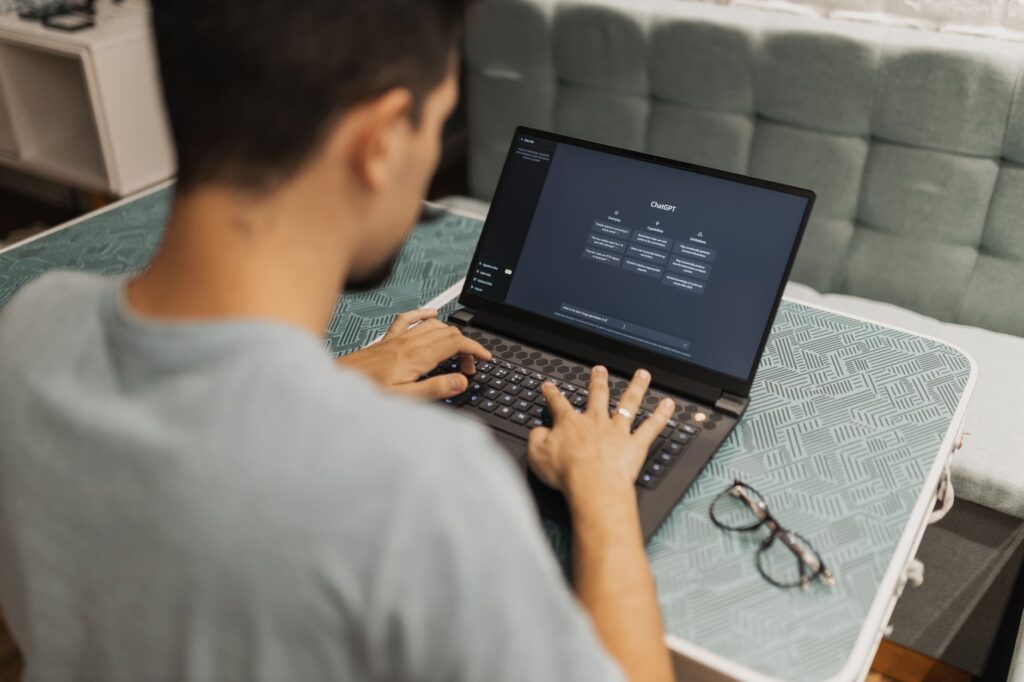
This covers anything you write repeatedly: client emails, proposal templates, onboarding messages, FAQ responses, social media posts, and deliverables. Tools like ChatGPT, Claude, or Gemini are genuinely excellent here when you give them the right inputs.
The key is building prompts you can reuse. Don’t just ask AI to “write me an email.” Create a master prompt that describes your tone, your business, your typical client, and what a great version of that email looks like. Save it somewhere accessible. Now you’ve got a one-click communication engine that sounds like you every time.
For example, a graphic designer might build a prompt that says: “You are writing on behalf of [Name], a brand identity designer who works with small business owners. The tone is warm but professional. Write a client follow-up email for a project that’s been delivered, asking for a testimonial and referrals. Keep it under 150 words.”
That’s a reusable system. Run it once a week, tweak two sentences, send it. You’ve turned a 20-minute task into a two-minute task.
2. Offer and Proposal System
If you’re doing any kind of service work, your proposals are money. A weak proposal loses clients you could have landed. A strong, consistent proposal wins them reliably. AI can help you build a proposal framework that you customize for each client rather than starting from scratch every time.
Feed an AI tool your service offerings, your ideal client profile, your pricing tiers, and two or three examples of successful past proposals. Ask it to generate a proposal template with clear sections for the client’s problem, your proposed solution, timeline, deliverables, and investment. Then use that template every time, adjusting the specifics per client.
The consistency alone will make you look more professional. And you’ll send proposals faster, which matters because speed often signals confidence to potential clients.
3. Content Repurposing System
If your side hustle involves any kind of content (and most do now), you need a repurposing system. Creating original content from scratch for every platform is exhausting and unnecessary. AI lets you write once and multiply.
Here’s a simple version: Write one core piece of content per week, whether it’s a blog post, a newsletter issue, a YouTube script, or a long LinkedIn post. Then use AI to turn that single piece into three to five shorter pieces for other platforms. A 1,000-word blog post becomes five tweets, a short-form video script, three Instagram captions, and a LinkedIn summary. Tools like ChatGPT or Jasper handle this well when you give them the original content and specific output instructions.
This is where systems for side hustle ai work beautifully because you’re not asking AI to replace your thinking, you’re asking it to extend your reach.
4. Client Onboarding and Delivery System
Every new client relationship starts with friction. Questions get asked, expectations get set (or misaligned), documents get exchanged. Building a structured onboarding system eliminates most of that friction before it happens.
Use AI to help you write a comprehensive client welcome guide that covers how you work, what you need from them, typical timelines, how revisions work, and how to communicate with you. Pair this with an intake questionnaire (tools like Typeform or Google Forms make this easy) and you’ve removed about 80 percent of the back-and-forth from new projects.
AI can also help you build a project checklist template for each service you offer, so you never miss a step and never have to rely on memory to deliver consistently.
Connecting Your Tools: When AI Gets Even More Powerful
Individual AI tools are useful. Connected AI tools are transformative. Once you’ve got your core systems working, the next step is linking them together using automation platforms like Zapier, Make (formerly Integromat), or n8n.
Here’s an example of what a connected hustle systems ai setup might look like for a freelance social media manager:
- A new inquiry lands in their email
- Zapier automatically creates a contact card in their CRM
- An AI-powered email (via a Gmail + ChatGPT integration) sends a personalized reply with their services guide attached
- When the client books a discovery call, their calendar tool notifies Notion, which creates a project workspace automatically
- After the call, an AI tool transcribes the recording and generates a project brief draft
None of that required manual intervention. The freelancer just showed up to the call and did their actual work. That’s the power of a properly connected side hustle ai workflow.
You don’t need all of this on day one. Build one connection, test it, then add another. A system built in stages is far more sustainable than trying to automate everything at once and giving up when something breaks.
How to Maintain and Improve Your AI Systems Over Time
Here’s something a lot of productivity content skips: systems need maintenance. AI tools get updated, your business evolves, your clients change, and the prompts that worked six months ago might not perform as well today.
Build a simple monthly review into your schedule. It doesn’t need to be elaborate , thirty minutes once a month is enough. Ask yourself:
- Which systems are saving me the most time right now?
- Where am I still feeling bottlenecked or frustrated?
- Are there new AI tools I should test for specific tasks?
- Do any of my templates or prompts feel outdated or off-brand?
Update what needs updating. Cut what’s not working. The goal is a lean, living system, not a perfect one you built once and never touched again.
It’s also worth keeping a “prompt library” , a simple document or Notion page where you store your best-performing prompts with notes on what they’re for. This becomes genuinely valuable over time and is one of those assets most side hustlers never think to build.
The Mindset Shift That Makes This All Work
There’s a temptation to treat AI as a magic button you press when you’re stuck. That’s not how it works, and that’s not how effective ai side hustle systems get built. The better mental model is to treat AI as a system architect working alongside you.
You bring the strategy, the judgment, the client relationships, and the expertise. AI brings speed, consistency, and scale. The combination is what lets someone with 15 hours a week to work on their side hustle compete with someone working on theirs full-time.
Roughly 73 percent of freelancers report that administrative work takes more time than expected, according to surveys from platforms like Fiverr and Upwork. That’s not a talent problem. It’s a systems problem. And it’s a solvable one.
Start with your time audit this week. Pick one system from the four above to build first. Spend two hours on it. Test it on a real project. Refine it once. Then build the next one. Six months from now, you’ll be running a significantly more efficient operation, and you’ll actually enjoy working on your side hustle again instead of dreading the overhead that comes with it.