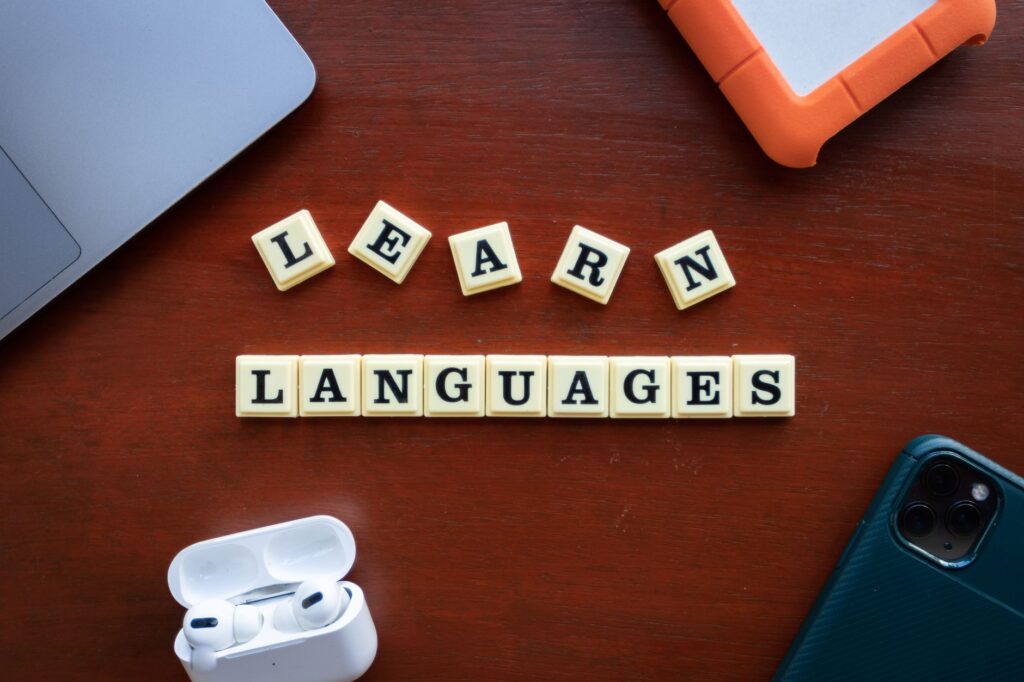
The language learning market is worth over $60 billion globally, and most of the people selling into it aren’t linguists or academics. They’re creators who figured out how to package knowledge efficiently and get it in front of motivated buyers. AI has made that easier than ever, and if you’re not already building a language content business, you’re leaving serious money on the table.
This isn’t about flooding the internet with low-quality worksheets. It’s about using AI tools strategically to produce genuinely useful learning materials, price them properly, and build a scalable income stream that doesn’t require you to trade hours for dollars indefinitely.
Why Language Learning Content Is One of the Best AI Business Opportunities Right Now
Language learners are obsessive buyers. They purchase apps, courses, workbooks, flashcard decks, grammar guides, conversation scripts, and pronunciation guides. They buy the same content in different formats because they’re always hunting for the method that finally clicks. That buying behavior makes language learning income with AI one of the most reliable models out there for new content creators.
The demand is enormous and evergreen. Spanish, Mandarin, French, Japanese, Arabic, and Portuguese learners number in the hundreds of millions. Even niche markets, like learners studying Korean for K-drama fans or Portuguese for digital nomads heading to Lisbon, contain enough buyers to generate meaningful monthly income. You don’t need a massive audience. You need the right product in front of the right people.
AI changes the equation on the supply side. Creating a 40-page grammar workbook used to take weeks of writing, formatting, and editing. With tools like ChatGPT, Claude, or Gemini, you can draft that workbook in hours, refine it with targeted prompts, and have it formatted for sale by the end of the week. The bottleneck isn’t content creation anymore. It’s strategy, quality control, and distribution.
The Types of Language Content That Actually Sell
Before you open a chat window and start prompting, you need to know what buyers actually want. Not everything sells equally well, and wasting time on low-demand formats is a common mistake.
Structured Workbooks and Grammar Guides
PDF workbooks remain some of the highest-converting products on platforms like Etsy, Teachers Pay Teachers, and Gumroad. Buyers like the tangible format, the ability to print pages, and the completeness of a structured resource. A Spanish verb conjugation workbook for beginners, a French pronunciation guide with phonetic breakdowns, or a Japanese hiragana practice worksheet set all perform consistently. These are evergreen products that require minimal updates and keep selling for years.
Conversation Scripts and Dialogue Packs
Intermediate learners particularly crave realistic dialogue. They’ve conquered the basics but struggle to understand how native speakers actually talk. AI is remarkably good at generating contextual conversations: ordering coffee in Naples, negotiating a rental contract in Berlin, discussing weekend plans in Seoul. Package 30 or 40 of these dialogues with vocabulary notes and comprehension questions, and you’ve got a product worth $15 to $25 on its own.
Vocabulary Flashcard Decks
Anki decks and printable flashcard sets sell steadily on Etsy and through direct downloads. AI can generate vocabulary lists organized by theme (travel, food, business, medical), provide example sentences, and suggest mnemonics. A well-organized 500-word Spanish vocabulary pack with sentences and translations is a genuinely useful product that learners will actually buy.
Email Courses and Micro-Lessons
Selling language lessons through AI-assisted email sequences is an underused model. A 30-day email course delivering one bite-sized lesson per day, covering vocabulary, a grammar point, and a short exercise, converts well when sold as a standalone product or bundled with a workbook. Platforms like ConvertKit or Beehiiv let you automate delivery entirely after setup.
How to Use AI to Build Your Content Without Sacrificing Quality
Quality control is the critical variable here. AI language content can be brilliant or riddled with subtle errors, and those errors will destroy your reputation fast if you’re not catching them. Here’s how to use AI effectively without shipping broken content.
Start With a Strong Prompt Architecture
Vague prompts produce vague content. Instead of asking ChatGPT to “write a Spanish lesson,” tell it exactly what you need: “Write a B1 level Spanish dialogue between two friends planning a hiking trip. Include 10 vocabulary items bolded in context, a brief grammar note on the subjunctive mood used in the dialogue, and three comprehension questions.” The specificity transforms the output from generic filler to something genuinely structured.
Build a library of prompt templates for each content type you produce. That library becomes a production system. Over time, you’ll refine those prompts based on what works, and your output quality will compound.
Always Run AI Output Past a Native Speaker or Verified Resource
This is non-negotiable if you don’t speak the target language yourself. AI makes mistakes in less common languages, occasionally uses unnatural phrasing, and sometimes confuses regional usage. Pay a native speaker on Fiverr or Italki $10 to $20 per document to review your content before publishing. That small investment protects your reviews and your long-term business.
If you do speak the language, your editing eye becomes your competitive advantage. You can move faster than sellers who can’t catch errors, and you can catch the subtle awkwardness that AI sometimes produces in complex grammar explanations.
Format Matters More Than Most Sellers Realize
A beautifully formatted workbook outperforms an identically-written plain document every time. Use Canva to apply professional layouts, add color coding for grammar categories, and create visually distinct sections. Buyers make purchase decisions partly on aesthetics, especially on visual platforms like Etsy. Your AI language business is also a design business, at least at the product level.
Where to Sell Your Language Learning Products
Getting the content right is half the battle. Distribution is the other half, and picking the right platform determines how quickly you build momentum.
Etsy for Printable and Digital Downloads
Etsy’s marketplace has millions of active buyers searching for educational downloads. Language learning content sells well here, particularly printable workbooks, flashcard sets, and planner sheets. The platform handles payments and delivery automatically once you set up your listings. SEO matters enormously on Etsy, so research what buyers are actually searching for using tools like Erank or Marmalead before naming your listings.
Teachers Pay Teachers for Curriculum-Aligned Content
If your content targets educators or homeschooling families, Teachers Pay Teachers is where the money is. Language lesson plans, classroom vocabulary games, grammar exercises, and reading comprehension passages sell at higher price points here because the buyers are professionals with budgets. A single well-reviewed resource can generate hundreds of dollars in passive income monthly.
Gumroad and Your Own Store for Maximum Margin
Platforms take cuts. Etsy charges listing fees plus a 6.5% transaction fee. Teachers Pay Teachers takes up to 20% on basic accounts. Gumroad charges 10%, and selling directly through your own Shopify store or WordPress site can bring that down to payment processing fees only (around 2 to 3%). Once you’ve validated products on marketplace platforms, migrating your best sellers to your own store makes financial sense.
Udemy and Course Platforms for Video-Based Content
If you’re comfortable on camera or with screen recording, turning your AI-assisted content into a video course opens another revenue channel. Use AI to script your lessons, then record yourself delivering them. Udemy has a built-in audience of over 60 million learners, and even a mid-performing course can generate consistent passive income. You can also sell language lessons through AI-scripted video content on Skillshare and Teachable.
Building Recurring Revenue Instead of One-Time Sales
One-time product sales are fine. Recurring revenue is better. The language learning space has a few natural mechanisms for building subscriptions and repeat buyers.
A monthly membership delivering fresh dialogue packs, vocabulary lessons, or mini-courses creates predictable income. Platforms like Patreon or Memberful make this straightforward to set up. Even a modest membership with 100 subscribers at $9 per month generates $10,800 a year, and AI lets you produce the content in a fraction of the time it would otherwise take.
Email lists are another compound asset. Every buyer who joins your list is a potential repeat customer. Send them weekly language tips, free mini-lessons, and occasional product promotions. This costs almost nothing to maintain and builds the kind of relationship that drives long-term revenue. AI language content money doesn’t just come from the first sale. It comes from the relationship you build after the sale.
Building a simple content funnel, where a free vocabulary guide captures email addresses and a paid workbook bundle is the immediate upsell, is achievable in a weekend and can run entirely on autopilot once it’s set up.
The Realistic Timeline and What to Expect
Don’t expect $5,000 your first month. Most successful language content sellers see their first meaningful sales within 30 to 60 days of publishing, then watch revenue grow as their product catalogs expand and reviews accumulate. A creator with 20 to 30 solid products spread across a couple of platforms, with a small email list driving repeat traffic, can realistically hit $1,000 to $3,000 per month within six months of consistent effort.
That number scales with catalog size, platform SEO, and audience building. The creators making $10,000 or more monthly in this space aren’t more talented. They started earlier, published consistently, and treated it like a real business rather than a side hustle experiment.
Pick one language, build five to ten products using AI, get them listed on Etsy or Teachers Pay Teachers this week, and start learning the market through actual data. Your first few products won’t be your best ones. Publish them anyway. The feedback loop you build from real sales and real reviews is the education no prompt template can replace.