The Old Way of Learning Was Slow. AI Changed That.
Picture this: you decide to learn Python, so you buy a $200 Udemy course, watch three hours of videos on a Tuesday night, and then don’t touch it again for two weeks. Sound familiar? Most people aren’t bad at learning. They’re bad at the system around learning. That’s exactly where AI steps in and quietly rewrites the rules.
Learning with AI tools isn’t just about having a chatbot answer your questions. It’s about building a personalized, on-demand learning loop that adapts to you specifically, not to some imaginary average student. Whether you want to pick up data analysis, copywriting, a new language, or woodworking fundamentals, the same framework applies. And once you see how it works, going back to passive video courses feels like navigating with a paper map.
Why AI Accelerates Skill Development in Ways Courses Can’t
Traditional learning has a fundamental flaw: it’s designed for a classroom of thirty people, not for you. Textbooks can’t tell when you’re confused. Video instructors can’t slow down because you missed a concept. Even the best structured courses move at a fixed pace that almost never matches how your brain actually absorbs information.
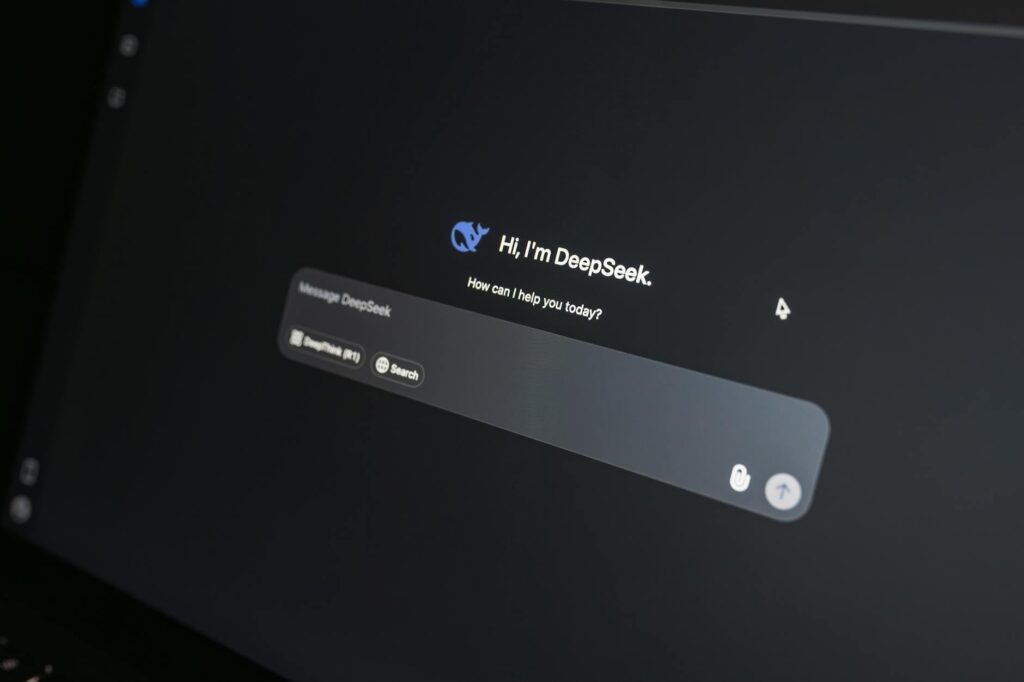
Skill development with AI breaks that mold completely. A model like ChatGPT, Claude, or Gemini can explain a concept five different ways until one clicks. It can quiz you immediately after you read something. It can take a topic you already understand and use it as a bridge to something you don’t. That kind of responsive, iterative teaching is what one-on-one tutoring delivers, and for most of history, that was a privilege reserved for people who could afford private instructors.
Roughly 70% of workplace learning happens informally, through doing, asking, and experimenting rather than through formal training programs. AI tools slot directly into that informal channel. Instead of waiting for a scheduled class, you can ask a question at 11pm on a Thursday and get a thoughtful, specific answer in seconds. The bottleneck between “I don’t understand this” and “now I do” collapses to almost nothing.
That compression of time is the core of what makes faster learning with AI so powerful. It’s not magic. It’s just removing friction at every single stage of the learning cycle.
Build Your Personal AI Learning System From Scratch
The difference between people who actually develop skills using AI and people who just feel like they’re learning is structure. Chatting aimlessly with a language model is a good way to feel productive without becoming competent. Here’s how to build a system that actually produces results.
Start With a Brutally Honest Skill Audit
Before you open any AI tool, get specific about where you are and where you need to be. Don’t say “I want to learn marketing.” Say “I understand basic social media content creation, I’ve never run paid ads, and I need to be able to manage a $3,000 monthly Google Ads budget within 90 days.” That level of specificity transforms the conversation you’ll have with AI from generic to genuinely useful.
Give that context directly to your AI tool. Paste it in as a preamble. Tell it your current knowledge level, your goal, your timeline, and any constraints you have (limited time, no budget for software, etc.). A well-framed prompt produces a completely different quality of guidance than “teach me Google Ads.”
Use AI to Build a Custom Learning Roadmap
One of the most underused applications of AI for skill development is asking it to create a structured curriculum just for you. Ask ChatGPT or Claude something like: “Based on my current level and my 90-day goal, build me a week-by-week learning plan with specific topics, recommended free resources for each week, and practice tasks I can complete without spending money.”
You’ll get back something remarkably detailed. It won’t be perfect on the first pass, and that’s fine. Treat it as a draft. Interrogate it. Push back on the timeline if it feels too aggressive. Ask it to add a review week after the fourth week to consolidate knowledge before moving forward. This is collaborative curriculum design, and it takes about fifteen minutes instead of the hours you’d spend piecing together a plan from Reddit threads and YouTube comments.
Learn Through Dialogue, Not Consumption
Here’s where most people leave enormous value on the table. They use AI the same way they’d use Google: ask a question, read the answer, move on. That’s information retrieval, not learning.
Real learning happens through active engagement. After you read an explanation, close it and try to restate the concept in your own words, then ask AI to evaluate your explanation and tell you what you missed. Ask “why” at least two levels deeper than the first answer. Ask for analogies. Ask for the most common misconception people have about this topic and then explain to the AI why that misconception is wrong. That active reconstruction of knowledge is what moves information from short-term awareness into genuine understanding.
The Feynman Technique, Supercharged
Richard Feynman had a famously effective learning method: if you can’t explain something simply, you don’t actually understand it. He’d identify gaps in his explanation, go back to source material, and try again. It’s a fantastic technique with one problem. You need a patient, knowledgeable person to tell you where your explanation breaks down.
AI is that person, available at any hour and infinitely patient. When you’re building a new skill, make it a habit to explain what you learned to the AI in plain language every day or two. Ask it to be a tough critic. Ask it to role-play as a skeptical interviewer and push back on your understanding. This is where the “ai learn skills” concept stops being abstract and becomes a real, measurable habit with compounding returns.
A junior developer I know used exactly this approach to learn React in about six weeks. Every evening, he’d explain to ChatGPT what he’d built that day in plain English, and then ask it why his code worked (or why it didn’t). He wasn’t just copying solutions. He was building the mental model underneath the syntax. By week six, he’d internalized concepts that his bootcamp colleagues were still struggling with after three months of video lectures.
Specific AI Tools Worth Building Into Your Routine
An effective AI learning guide needs to be honest about which tools actually move the needle, so here’s a practical breakdown.
- ChatGPT (GPT-4o): The Swiss Army knife. Best for open-ended explanation, custom roadmaps, Socratic dialogue, and practice problem generation across virtually any subject.
- Claude (Anthropic): Exceptionally good for nuanced explanations, reading comprehension tasks, and working through long documents or study materials you upload. Its responses tend to be more conversational and less listy, which suits deep conceptual learning well.
- Khanmigo (Khan Academy): Purpose-built for education. It uses a strict Socratic approach and won’t just give you answers, it guides you to figure them out. Excellent for math, sciences, and humanities at the foundational level.
- Perplexity AI: Use this for research-heavy skills where you need current, cited information. It links to sources, which matters when you’re learning a rapidly evolving field like AI itself, nutrition science, or anything legally or medically sensitive.
- Anki with AI-generated flashcards: Paste your notes or an AI explanation into ChatGPT and ask it to generate Anki-formatted flashcards. Then load them into Anki’s spaced repetition system. This combination turns AI-generated content into long-term memory, not just short-term comprehension.
Don’t try to use all of them simultaneously. Pick one primary tool, learn its strengths deeply, and add others as specific needs arise. Tool overload is a real productivity killer disguised as thoroughness.
How to Practice Skills, Not Just Understand Them
Understanding a skill and being able to perform it are two completely different things. This is where a lot of AI-assisted learning stalls. People get very good at understanding concepts through conversation and then discover they can’t actually do the thing under real conditions.
The fix is deliberate, AI-supervised practice. For a writing skill, have AI give you a brief for a short piece, write it without assistance, and then paste it back and ask for specific, critical feedback, not general encouragement. For a coding skill, ask AI to give you a problem slightly above your current level, try to solve it for at least 20 minutes without help, and only then ask for a hint (not the answer). For a language skill, run a conversation entirely in that language and ask AI to mark every grammatical error at the end without interrupting the flow mid-conversation.
The key principle here is that AI should be your training partner, not your replacement. The moment you start using it to bypass the struggle rather than support it, your skill development slows down. Struggle isn’t a sign that learning is broken. It’s the mechanism by which learning works.
Measuring Progress So You Don’t Fool Yourself
Subjective feelings of progress are notoriously unreliable. After a solid week of AI-assisted study sessions, you’ll feel more confident, but confidence and competence diverge more often than they converge. Build objective checkpoints into your learning plan.
Ask AI to quiz you at the end of each week using questions that require application, not just recall. “What is X?” is a recall question. “You’re given situation Y. How would you apply X and what would you watch out for?” is an application question. The latter tells you whether you’ve actually built a usable skill or just a glossy familiarity with the terminology.
Track these results somewhere simple, even a notes app. Watching your scores on the same category of questions improve over several weeks is more motivating than any learning streak badge an app can offer you.
Start Small, But Start Today
Pick one skill you’ve been meaning to develop for the past three months. Open ChatGPT or Claude right now, paste in your honest skill audit, and ask it to build you a four-week starter plan with practice tasks. Don’t spend an hour crafting the perfect prompt. Don’t wait until Monday. The entire setup takes under ten minutes, and the gap between people who are actively using AI learn skills strategies and people who are still watching passive courses is growing every month.
The best AI learning guide in the world is useless if you never apply it. Fifteen minutes of structured, AI-assisted practice today is worth more than a 10-hour course you keep putting off. Start messy. Refine as you go. The system compounds, and so will you.