The Fastest Way to Turn Your Knowledge Into Listenable Learning
If you’ve ever wished you could clone yourself to teach more students, reach wider audiences, or simply stop recording the same explanations over and over, AI audio tools are about to change your life. Creating professional-quality educational audio used to require a recording studio, a decent microphone, and hours of editing. Now you can produce polished ai audio lessons in a fraction of the time, with tools that most people can learn in an afternoon.
This isn’t about replacing genuine teaching. It’s about removing the production friction that stops good educators from getting their content out into the world. Whether you’re a classroom teacher, an online course creator, a corporate trainer, or just someone with expertise worth sharing, here’s exactly how to do it.
Choosing the Right AI Tools for Educational Audio
Before you record a single word, you need to pick your toolkit. The good news is there’s no shortage of options. The tricky part is knowing which tools actually serve educational use cases rather than just marketing or entertainment content.
For text-to-speech conversion, ElevenLabs, Murf, and Play.ht are currently the three strongest players for educational audio ai projects. ElevenLabs produces the most natural-sounding voices and handles complex vocabulary well, which matters enormously when you’re teaching subjects with technical terminology. Murf is excellent if you want studio-quality output with easy editing controls, and it has a clean interface that doesn’t require any technical background. Play.ht sits comfortably in the middle, offering solid quality at a lower price point.
If you want to create lesson audio with ai that goes beyond just reading text aloud, look at tools like Synthesia or Descript. Descript, in particular, lets you edit audio the way you’d edit a document. Delete a word in the transcript and it disappears from the audio. Fix a mispronunciation by retyping. It’s genuinely impressive for iterative lesson production.
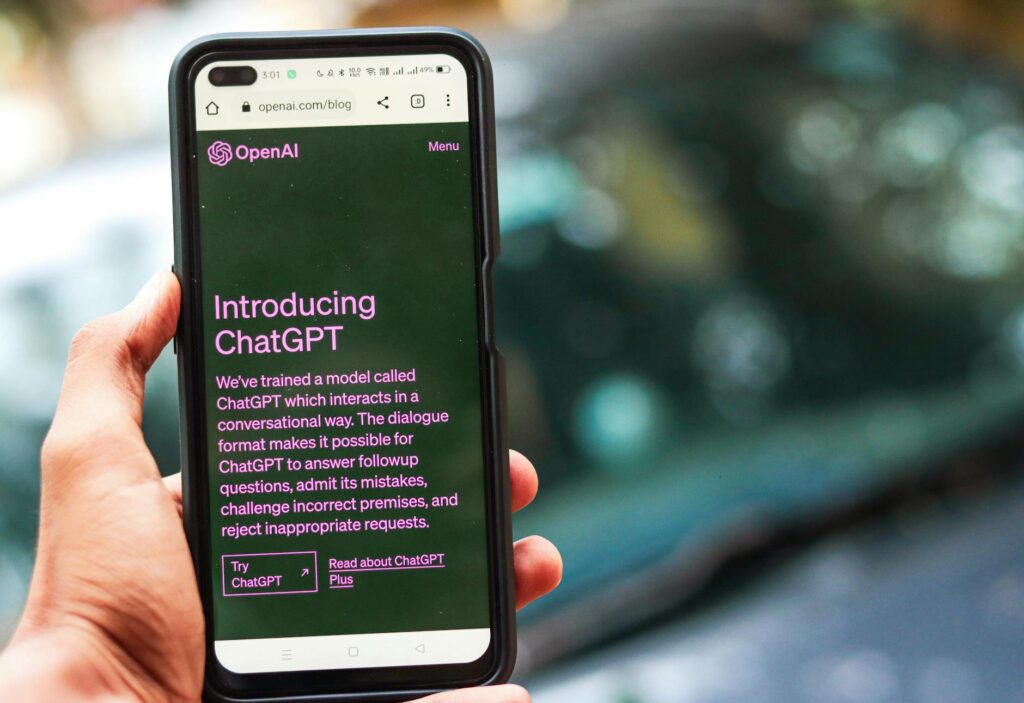
For script generation, ChatGPT, Claude, and Gemini are all strong options. The real skill here is prompting them to write in a teaching voice rather than an encyclopedic one. More on that in a moment.
Writing Scripts That Actually Teach (Not Just Inform)
Here’s where most people stumble. They assume that good educational content is just accurate information delivered clearly. But there’s a meaningful difference between information and instruction. A Wikipedia article is informative. A good lesson is instructional. It anticipates confusion, builds on prior knowledge, uses examples, and checks comprehension along the way.
When you’re using AI to generate scripts for learning audio ai projects, you need to give the model very specific instructions. Don’t just paste in your notes and ask for a script. Instead, structure your prompt like this:
- Specify your learner’s level (beginner, intermediate, advanced)
- Define the single core concept the lesson should teach
- Ask for an analogy or real-world example to anchor the concept
- Request a brief summary or recap at the end
- Specify a conversational tone, not a formal one
For example, instead of prompting “Write a lesson on photosynthesis,” try something like: “Write a 5-minute audio lesson script on photosynthesis for high school students who already understand basic cell biology. Use an analogy to a kitchen or cooking process. Keep the tone conversational and friendly. End with three takeaway points.”
That level of specificity produces scripts that actually sound like a teacher talking rather than a textbook being read aloud. The difference is significant when you convert it to audio.
Structuring Your Lessons for Audio-First Learning
Audio works differently from text. Readers can skim, re-read, and jump around. Listeners can’t. That means your lesson structure needs to compensate for the linearity of sound.
Good ai teaching audio follows a rhythm that keeps attention from drifting. A strong structure looks something like this: a hook that states the problem or question up front, a brief roadmap telling the listener what they’re about to learn, the core teaching broken into two or three clear chunks, and a closing recap with a clear takeaway. That’s it. Short, purposeful, and designed for ears rather than eyes.
Segment length matters more than most people realize. Research on podcast listening and audiobook retention consistently shows that attention degrades after about 10 to 12 minutes of sustained single-topic audio. For educational content, where cognitive load is higher, that window shrinks. Keep individual lessons between 5 and 8 minutes. If your topic is complex, break it into a series rather than one long session.
Signposting language is your best friend in audio lessons. Phrases like “here’s the key point,” “let’s pause on that,” or “so what does this mean in practice?” all serve as audio landmarks that help listeners track where they are in the lesson. Build these cues into your AI-generated scripts explicitly. Add them to your prompt instructions or edit the script to include them before you convert to audio.
Voice Selection and Audio Quality: Details That Make or Break It
Once your script is ready, the next decision is which voice to use. This isn’t trivial. The voice carries emotional tone, pacing, and authority, all of which affect how learners engage with the material.
For most educational audio ai applications, you want a voice that feels warm and authoritative without sounding stiff. Avoid voices that trend too formal or robotic, especially for younger learners or introductory-level content. Most platforms let you preview voices on your actual script before committing, which is always worth doing. A voice that sounds great on a demo clip might not handle your specific vocabulary or pacing as well.
Pace is adjustable on most platforms, and the default speed is often slightly too fast for complex material. For technical subjects or anything involving new vocabulary, drop the speed by about 10 to 15 percent from the default. It feels slow when you’re editing, but listeners processing new information appreciate the breathing room.
Don’t ignore background elements. A very subtle ambient track, something like light instrumental music or a soft neutral sound bed, can make plain text-to-speech feel significantly more produced and engaging. Tools like Soundraw or Epidemic Sound have libraries of royalty-free educational background music. Keep it quiet, around minus 25 to minus 30 decibels below the voice track, so it supports rather than competes.
Adding Interactivity and Comprehension Checks
One legitimate concern about create lesson audio ai approaches is that audio is passive. Students listen, but do they actually learn? This is a real challenge and one worth addressing rather than dismissing.
The simplest solution is to design your lessons with deliberate pauses and prompts built into the audio itself. Scripting in a line like “pause the audio now and write down three things you already know about this topic” costs you nothing and dramatically increases active engagement. You can use these prompts at the start to activate prior knowledge, mid-lesson to encourage reflection, and at the end to consolidate learning.
For more structured applications, pair your audio with a lightweight companion document: a PDF one-pager, a short quiz, or a fill-in-the-blank notes sheet. Many learning management systems like Thinkific, Teachable, or even Google Classroom let you attach supplementary materials directly to audio content. The audio delivers the instruction; the document gives learners something to interact with.
You can also use AI to generate comprehension questions that match your lesson content. Feed your script back into ChatGPT or Claude and ask it to generate five multiple-choice questions or three open-ended reflection prompts. This takes about two minutes and turns a passive listening experience into a proper instructional unit.
Publishing, Distributing, and Scaling Your Audio Lessons
You’ve got polished learning audio ai content. Now you need to get it in front of learners. The distribution strategy depends entirely on your context and goals.
For independent creators or course sellers, packaging lessons as a podcast feed is surprisingly effective. Private podcast tools like Hello Audio or Supercast let you deliver password-protected audio to paying students. Learners access lessons through their preferred podcast app, which means they can listen during commutes, workouts, or anywhere else. The consumption rates for audio delivered this way tend to be higher than for video courses, largely because of the flexibility.
For institutional educators, uploading audio directly to your LMS is the cleanest path. Most platforms accept MP3 files natively. Label your files clearly with lesson numbers and titles so students can navigate without confusion.
Scaling is where the real power of educational audio ai becomes obvious. Once you’ve established your workflow: write script, refine in AI, generate audio, layer music, export, you can produce a new lesson in roughly 30 to 45 minutes. Contrast that with filming and editing a video lesson, which often takes four to six hours for similar content. Over the course of a full curriculum, that time savings is enormous.
Start Small, Then Build Your Audio Curriculum
The educators who get the most out of these tools don’t try to build an entire course in a weekend. They pick one lesson, work through the full process from script to final audio file, and learn from what they get. Maybe the voice pacing needs adjustment. Maybe the script structure needs another pass. That one lesson becomes the template for everything that follows.
Pick a topic you could explain comfortably in a five-minute conversation. Draft a script with the help of an AI model using the prompting approach outlined above. Choose a voice, generate your audio, and listen back critically. Then publish it. Waiting for perfection will cost you months. A good lesson delivered consistently beats a perfect lesson that never ships.
The combination of AI writing tools and AI voice generation has genuinely lowered the barrier to quality audio education. Your expertise is the ingredient that can’t be generated. These tools just help you package and share it faster than ever before.