Running a print on demand business without AI assistance in 2024 is a bit like trying to compete in Formula 1 with a family sedan. You can do it, but you’re leaving an enormous amount of speed, efficiency, and profit on the table.
Print on demand has exploded as a business model precisely because the barrier to entry is low. No inventory, no upfront costs, no warehouses. But that low barrier cuts both ways. Everyone and their cousin is selling graphic tees on Redbubble and Merch by Amazon, which means the sellers who actually win are the ones who move faster, design smarter, and list more products with better SEO than the competition. That’s exactly where AI comes in. This print on demand AI review covers the tools that are genuinely moving the needle for real POD sellers right now, not theoretical ones.
Why AI Has Become a Game-Changer for POD Sellers
Ask any veteran print on demand seller what their biggest bottleneck is, and you’ll hear one of three answers: design volume, niche research, or listing optimization. Creating a unique design for every micro-niche you want to target takes hours. Researching what’s trending before it peaks takes intuition and time. Writing SEO-optimized product titles and descriptions for hundreds of listings makes most sellers want to close their laptop and take a long walk.
AI doesn’t just speed these tasks up. It fundamentally changes what’s possible for a solo seller or small team. Someone running a one-person POD shop can now produce output that rivals a team of five. The best ai pod tools handle the repetitive cognitive work, freeing you up to focus on strategy and quality control. That’s not hype. That’s what sellers in Facebook groups and Reddit communities are reporting every single week.
The question isn’t whether to use AI. It’s which tools are actually worth your time and money.
Midjourney and Adobe Firefly: The Design Generation Heavyweights
When people talk about print on demand ai tools for design, two names dominate the conversation: Midjourney and Adobe Firefly. They serve slightly different users, but both have become essential depending on your workflow.
Midjourney, accessed through Discord, produces stunning artistic outputs that are genuinely difficult to distinguish from human illustration at first glance. For POD sellers targeting aesthetics like cottagecore, dark academia, retro vintage, or any style with a strong visual identity, Midjourney can generate print-ready concept art faster than any human designer. The learning curve is real. You’ll spend time learning how to write prompts that actually produce what you need. But once you crack that skill, the velocity is staggering. Some sellers report generating 50 to 100 usable design concepts in a single afternoon.
Adobe Firefly takes a different approach. It’s baked directly into Photoshop and Illustrator, which means it fits into existing creative workflows without friction. Its biggest advantage for POD is that Adobe has trained Firefly on licensed content, reducing the copyright ambiguity that makes some sellers nervous about Midjourney. If you’re already an Adobe Creative Cloud subscriber, Firefly is essentially a no-brainer addition to your toolkit. The generative fill feature alone can extend backgrounds, remove unwanted elements, and clean up designs in seconds.
Neither tool produces perfectly print-ready files straight out of the box. You’ll still need to upscale, vectorize, or clean up transparency depending on your platform. But as starting points, both are exceptional.
ChatGPT and Claude for Listings, SEO, and Niche Research
Design gets all the glamour, but the real money in print on demand often lives in the listing. A mediocre design with brilliant SEO will frequently outsell a gorgeous design buried on page 47 of search results. This is where large language models like ChatGPT and Claude have become indispensable for serious POD sellers.
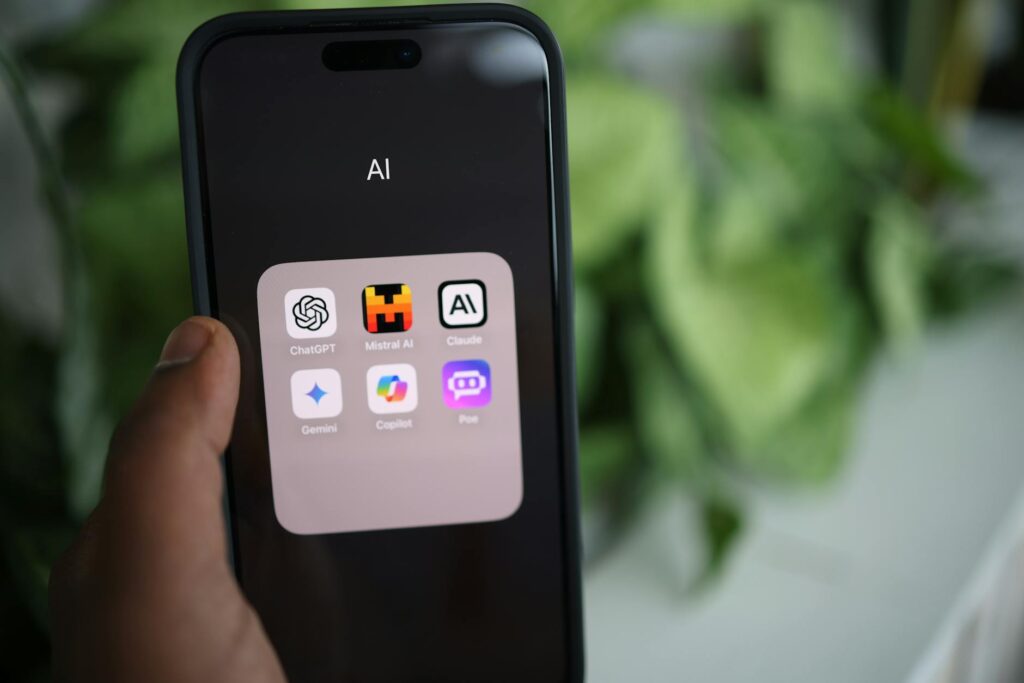
The practical applications are wider than most beginners realize. ChatGPT can generate hundreds of niche ideas from a single broad category. Ask it to brainstorm 50 sub-niches within “dog lover gifts” and you’ll walk away with angles you wouldn’t have considered in an hour of brainstorming on your own. It can then write keyword-rich product titles, bullet points, and descriptions tailored to whatever platform you’re listing on, whether that’s Etsy, Merch by Amazon, or Redbubble.
Claude, developed by Anthropic, tends to produce writing that reads more naturally and conversationally, which matters more than people think. Etsy shoppers aren’t reading robotic product descriptions and thinking “great, sold.” They’re buying from listings that feel personal and specific. Claude’s output often needs less editing to reach that tone.
One underused application: feeding bestseller data into ChatGPT and asking it to identify patterns. Paste in 20 top-selling product titles from a niche, ask the AI to identify common keywords, sentiments, and structural patterns, and you’ve got a data-driven blueprint for your own listings. This kind of competitive analysis used to take hours. With AI, it takes minutes.
Canva AI: The Workhorse Tool Most Sellers Already Have
Canva has quietly become one of the top pod ai tools, and many sellers are using it daily without fully leveraging its AI features. The Magic Design feature lets you describe what you want and generates template options instantly. Magic Write handles copy. Magic Eraser removes backgrounds and unwanted elements. Text to Image generates custom visuals without leaving the Canva environment.
What makes Canva particularly valuable in the POD context is its accessibility. You don’t need design training to produce a clean, professional-looking graphic. For sellers focused on text-based designs, quote shirts, or typographic products (which consistently sell well across platforms), Canva’s AI-enhanced editor dramatically speeds up production. You can go from concept to finished design file in under ten minutes once you’ve got a workflow established.
Canva’s template library also provides a starting point that Midjourney doesn’t. If you need a birthday mug design or a funny fishing-themed hoodie, there’s likely already a base template close to what you need. AI tools let you customize and differentiate those templates much faster than doing it manually.
The free tier is surprisingly capable, but Canva Pro at around $15 per month unlocks background removal, brand kits, and expanded AI features that pay for themselves quickly at scale.
Kittl: The Hidden Gem Serious POD Sellers Are Talking About
If you haven’t heard of Kittl yet, pay attention. It’s become one of the most discussed tools in POD communities over the past year, and the enthusiasm is justified. Kittl is a design platform built with print applications specifically in mind, and its AI features are tailored to the kind of vintage, retro, and illustrative styles that consistently perform well on Merch by Amazon and Etsy.
The AI text effects alone are worth exploring. Creating distressed vintage typography, neon effects, or dimensional lettering that would take a skilled designer significant time to produce manually happens in seconds inside Kittl. The platform also handles SVG exports cleanly, which matters enormously for print quality and platform compatibility.
Kittl’s growing template library skews heavily toward the aesthetic styles POD buyers actually purchase. That’s not an accident. The team has clearly studied what sells and built their content library accordingly. For sellers who want to produce high-quality, on-trend designs without advanced Photoshop skills, Kittl might be the single best investment in this list. Plans start at around $10 per month for the Pro tier, making it accessible even for sellers just starting to scale.
Merch Informer and EverBee: AI-Assisted Research Tools Worth Your Attention
No ai for pod sellers toolkit is complete without dedicated research tools. Creating beautiful designs in profitable niches matters. Creating beautiful designs in saturated, low-margin niches wastes your time regardless of how good the AI output is.
Merch Informer has been around long enough to build genuine credibility. It surfaces trending keywords, analyzes competitor listings, and helps you identify niches with real search volume but manageable competition on Merch by Amazon specifically. The AI-driven keyword suggestions save hours of manual research and often surface angles that manual searching would miss.
EverBee has become the go-to equivalent for Etsy sellers. It shows estimated monthly revenue for competing listings, which is frankly the data that changes everything. When you can see that a specific niche is generating $2,000 to $5,000 per month for top sellers, you can make an informed decision about whether it’s worth entering. That kind of validated data, surfaced quickly through AI-assisted research, transforms how you prioritize your design time.
Used together, these research tools and the design AI platforms above create a complete workflow: research validates the niche, design AI produces the artwork, and language AI optimizes the listing. Each piece amplifies the others.
Building Your Own AI-Powered POD Stack
After reviewing these tools and tracking how POD communities talk about them, one thing becomes clear: there’s no single best tool. There’s a best combination for your specific situation.
If you’re just starting out and budget is tight, start with the free tier of Canva, ChatGPT’s free version, and EverBee’s basic plan. That combination alone gives you design capability, listing optimization, and market research without spending a dollar. As revenue grows, layer in Kittl Pro for elevated design quality and Merch Informer if you’re targeting Amazon specifically.
If you’re already established and looking to significantly increase output, Midjourney combined with Claude and a research tool like EverBee or Merch Informer is the stack that most high-volume sellers are running. Adobe Firefly adds professional finishing capability if you’re already in the Creative Cloud ecosystem.
The sellers winning in print on demand right now aren’t necessarily the most talented designers or the best copywriters. They’re the ones who’ve figured out how to use these tools together systematically. Start building your stack today, test methodically, and track what actually converts. The best print on demand ai tools are only as powerful as the strategy behind them.