The Rules of Video Production Just Got Rewritten
A solo creator with a laptop is now producing content that rivals agency-level work. That shift didn’t happen gradually , it happened almost overnight, and AI video tools are the reason why.
If you’ve spent any time around digital content in the last two years, you’ve felt it. Videos that used to take days to produce are getting done in hours. Scripts, voiceovers, animations, editing , tasks that once required a team of specialists are now handled by software that anyone can learn in an afternoon. This is the ai video revolution in real time, and it’s not slowing down.
But what does this actually mean for creators, businesses, and marketers? Is this a genuine shift in how video gets made, or is it mostly hype? Let’s dig into what’s really happening and why it matters to you right now.
What AI Is Actually Doing to the Video Production Process
Traditional video production has a pretty well-established workflow: concept, scripting, filming, editing, color grading, sound design, distribution. Each step requires specific expertise. If you wanted a polished two-minute explainer video, you were realistically looking at hiring a videographer, an editor, possibly a voice actor, and a motion graphics designer. Costs could easily hit $3,000 to $10,000 for a single piece.
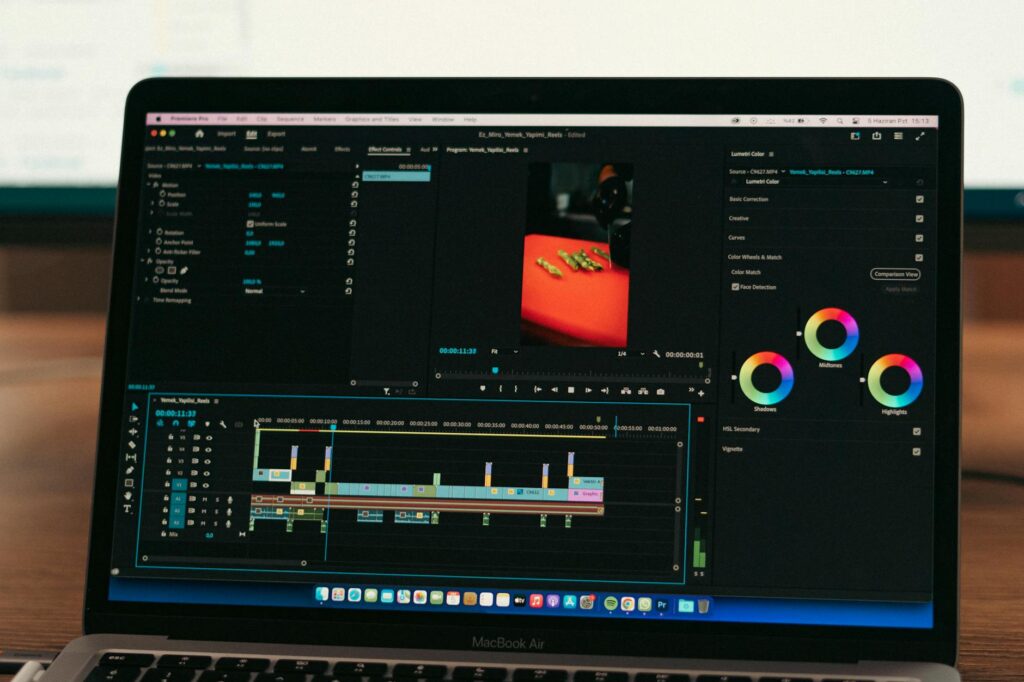
AI tools are collapsing that workflow dramatically. Platforms like Runway, Synthesia, Pictory, and HeyGen can handle multiple steps simultaneously. You can paste in a script, select an AI avatar, generate a voiceover in dozens of languages, auto-add captions, and export a broadcast-ready video in under an hour. The learning curve is minimal compared to traditional production software like Premiere Pro or After Effects.
This is ai changing video production in the most practical sense. It’s not replacing creativity , it’s removing the technical bottlenecks that kept creative ideas locked behind expensive production pipelines.
Text-to-Video: The Feature That’s Turning Heads
One of the most dramatic developments is text-to-video generation. Tools like Sora (from OpenAI), Runway Gen-3, and Kling AI let you describe a scene in plain language and generate video footage from scratch. Type “a golden retriever running through a snowy field at sunset, cinematic lens” and within seconds you have footage that would have required a film crew, a trained dog, and a very patient photographer just a few years ago.
The quality isn’t perfect yet. Motion artifacts, occasional physics problems, and inconsistency between frames are still real issues. But the pace of improvement is extraordinary. Outputs that looked clearly synthetic in early 2023 are now convincing enough to use in marketing content, social posts, and B-roll sequences.
AI-Powered Editing That Cuts Production Time in Half
Beyond generation, AI is transforming the editing side too. Tools like Descript allow you to edit video by editing text , delete a word from the transcript and the corresponding footage disappears. Adobe’s AI features in Premiere Pro can automatically remove filler words, reframe footage for different aspect ratios, and even extend backgrounds using generative fill.
For creators publishing across YouTube, Instagram Reels, TikTok, and LinkedIn simultaneously, this is a massive time saver. One piece of source content can be automatically reformatted for every platform without manually cropping and repositioning every single clip. That kind of efficiency used to require a dedicated social media video editor.
Who’s Benefiting Most From This Shift
Not every creator or business is equally impacted. The biggest winners right now fall into a few clear categories.
Small businesses and solopreneurs are probably seeing the most dramatic impact. A local real estate agent, a fitness coach, an e-commerce brand , these are the people who always knew video would help their marketing but couldn’t justify the production costs. AI tools have handed them a workable solution. A real estate agent can now create polished property walkthrough videos with AI narration, branded graphics, and music in less than 30 minutes.
Marketing teams at mid-size companies are also benefiting significantly. Instead of outsourcing video content to agencies for every campaign, internal teams can produce multiple variations of an ad, test different hooks, and iterate quickly based on performance data. Speed is a genuine competitive advantage in digital marketing, and AI is delivering it.
Content creators who were already producing video regularly are using AI to scale without burning out. Posting consistently is one of the hardest parts of building an audience on YouTube or social media. AI tools help bridge the gap between “I have an idea” and “I have a finished video,” which means more output without proportionally more hours.
What About Professional Video Producers?
This is the conversation a lot of people in the industry are having quietly. Freelance videographers, editors, and motion designers are asking real questions about where they fit in this new environment.
The honest answer is that it depends heavily on your positioning. Highly creative, strategic, or brand-sensitive work still benefits enormously from human skill and judgment. A documentary filmmaker, a cinematographer with a distinctive visual style, or a video strategist who understands narrative , these professionals aren’t being automated away. But a generic explainer video or a basic social media clip? That work is genuinely being handled by AI now, and clients know it.
The professionals adapting fastest are the ones learning to use AI tools as part of their workflow rather than ignoring them. An editor who can deliver three times the output in the same hours is worth more to a client, not less.
The Business Case for AI Video Is Already Proven
Let’s talk numbers for a moment, because the business case here isn’t theoretical. According to a 2024 report from Synthesia, companies using AI-generated video for training content reported a 50% reduction in production time and cost compared to traditional video methods. Wyzowl’s annual video marketing survey found that 91% of businesses are using video as a marketing tool , and the constraint has consistently been production capacity and budget, not ideas.
When you remove the production bottleneck, you get more video. More video means more touchpoints with your audience. More touchpoints, when the content is relevant, mean better conversion rates. The video creation ai impact on marketing ROI is showing up in actual business results, not just tech demos.
Personalization is another angle worth understanding. AI tools are starting to enable video content that’s personalized at scale. Imagine sending a prospecting video where the AI avatar addresses each recipient by name, references their company, and adjusts the pitch based on their industry. HeyGen and similar platforms are already offering versions of this. In outbound sales contexts, personalized video outreach has response rates significantly higher than generic emails , some users report 3x to 5x improvements.
The Limitations You Should Know About Before Going All-In
AI video tools are impressive, but they’re not magic. Being honest about the limitations matters if you’re making real decisions about your content strategy.
Authenticity is still a human advantage. Audiences connect with real people, real stories, and genuine emotion. An AI avatar delivering your brand message is convenient, but it’s not the same as a founder speaking directly to camera with conviction. For brand-building content where trust and personality matter, human presence still outperforms.
Consistency across complex projects is still tricky. If you need multiple scenes with the same characters, maintaining visual consistency across AI-generated footage is genuinely difficult with current tools. For short, simple content this isn’t a problem. For longer, narrative-driven work, it can be a serious constraint.
Copyright and usage rights are also a gray area you shouldn’t ignore. Some AI tools train on content that raises intellectual property questions. If you’re producing commercial content, it’s worth understanding what rights you actually have to AI-generated assets and whether your tool of choice has a clear policy on commercial licensing.
Quality Control Still Requires Human Eyes
Even the best AI tools produce outputs that need review. A mispronounced word in an AI voiceover, a weird visual artifact in generated footage, captions slightly out of sync , these things happen regularly enough that you can’t just set and forget. Build review time into your workflow. AI does the heavy lifting, but humans catch the mistakes that would embarrass you publicly.
Where AI Video Is Heading in the Next Few Years
The future ai video creation landscape is going to look significantly different from what we have even today. A few trajectories are pretty clearly in motion.
Real-time video generation is coming. Right now, most AI video tools require rendering time , you input something and wait for the output. As processing power improves and models become more efficient, real-time generation is going to become standard. Live streaming with AI-generated visual elements, interactive video content, and dynamic ads that change based on viewer data are all on the near horizon.
Multimodal AI is going to make the production process even more integrated. Instead of using five different tools for script, voiceover, footage, editing, and captions, you’ll describe your video to a single system and it’ll handle the entire pipeline. Early versions of this exist already. In two to three years, the full integrated workflow will be accessible to everyday creators.
The ai video content future is also deeply intertwined with personalization at scale. As AI gets better at understanding individual viewer preferences and behavior, video content will adapt dynamically to who’s watching. Different hooks, different pacing, different calls to action , all served automatically based on what the platform knows about the viewer.
What’s clear is that waiting to engage with these tools puts you at a real disadvantage. The creators and businesses experimenting now are building skills, workflows, and content libraries that will compound in value as the technology matures. You don’t need to adopt every tool on the market, but picking two or three that fit your workflow and genuinely learning them is one of the highest-leverage things you can do for your content output right now. Start with your biggest production bottleneck, find the AI tool that addresses it specifically, and build from there. The gap between early adopters and everyone else is only going to widen.